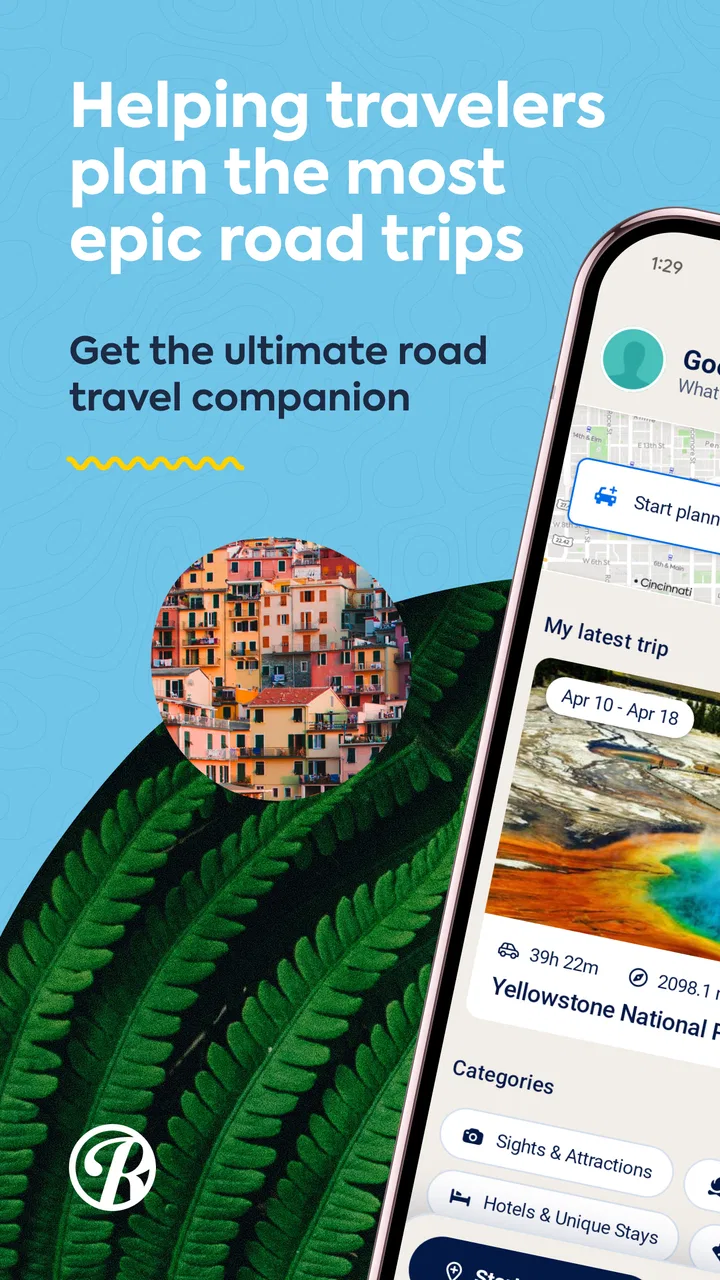
Roadtrippers - Trip Planner
- 2.5
- Rating
- 1.00M
- Installs
- Free
- Price

 Analysis by App-foxy
I like road trips most when there is room for a little surprise, but “a little surprise” is very different from losing an hour to a poorly chosen stop. Roadtrippers – Trip Planner is built for that middle ground. It is a free travel and local app from Roadtrippers that helps turn a route into something more deliberate, with places to consider along the way instead of treating the drive as nothing more than a line between two cities.
After spending time with it, I see the app as a planning companion rather than a replacement for everyday navigation. Its strongest idea is simple: start with the journey, then look for interesting places that fit the journey. That makes it useful for weekend drives, family holidays, scenic detours and travelers who would rather discover a roadside attraction than search randomly after leaving home.
The experience is not perfect. The average rating sits at 2.2 from around 8.7 thousand ratings, so expectations should be realistic. Still, the concept remains appealing, especially if you enjoy building an itinerary before you get behind the wheel. The app has passed one million installs, and its long presence in the travel category shows that the road-trip planning problem is substantial enough to keep attracting users.
You May Also Like

 Blood Strike: 2.5 Anniversary
Blood Strike’s Loadouts Turn Every Drop Into a Tactical Gamble
A close look at Blood Strike’s custom loadouts: how fast access to signature weapons reshapes its battle royale rhythm, rewards preparation, and narrows the gap between fights.

 Pandora - Music & Podcasts
Pandora’s Music Is Easy to Start, but Harder to Recover
Pandora’s strength is its low-effort path from a seed to a station. Its weak spot is how much confidence it asks you to place in connection, setup, and quiet recovery.

 8 Ball Pool
 Is Built on Rivalries, Rematches, and Routine
A close look at the rivalries, rematches, shared routines, and unanswered safety questions that turn a quick pool match into a persistent mobile community.

 Samsung Music
’s Quiet Strength Is Playing What You Already Own
Its reach comes less from spectacle than from dependable access to a personal library. That simplicity is both the app’s strongest retention engine and its ceiling.

 AccuWeather: Weather Radar
AccuWeather Review: A Quick, Clear Forecast for Everyday Decisions
For everyday plans, the best forecast is the one you can understand quickly. AccuWeather makes rain timing, radar, and local conditions easy to act on, with a few trade-offs.

 Hill Climb Racing
Why Hill Climb Racing Still Turns Crashes Into One More Run
A tiny car, a bumpy hill and one more upgrade: Hill Climb Racing keeps resurfacing because its simple chaos makes every near-miss feel personal.
More From Our News Desk



How the current Roadtrippers experience works
The first thing I noticed is that the app encourages me to think in terms of a complete trip, not just a destination. A normal map application is excellent when I already know where I am going and need the quickest route. This app is more useful earlier, when I am asking, “What would make this drive worth remembering?”
I can begin with a starting point and destination, then shape the route around places that interest me. That change in mindset matters. Instead of opening a search engine for every possible stop, I can explore the journey as one plan and judge whether a detour belongs in it. For travelers who like roadside landmarks, unusual local businesses, outdoor stops or historic locations, that approach feels more natural than switching between several unrelated tools.
It also helps with the emotional side of trip planning. A long drive can look intimidating when it is represented only by distance and arrival time. Breaking it into meaningful stops gives the day a rhythm. I can decide where to pause, which stops are optional and where the route becomes too ambitious. That makes the app valuable even before I leave home, because it turns vague enthusiasm into a practical outline.
My advice is to treat the first route as a draft. I would not immediately accept every interesting suggestion. Instead, I would add a few possibilities, look at how far they pull the route away from the main road, and remove anything that makes the day feel rushed. The best itinerary is rarely the one with the greatest number of pins. It is the one that leaves enough time to enjoy the stops.
A realistic weekend planning scenario
Imagine planning a two-day drive with a partner or family. On the first evening, I would enter the main route and browse for places that could work as breakfast, a short walk, a memorable lunch or an afternoon break. Then I would separate “must see” stops from “nice if nearby” ideas. This distinction is important because road conditions, tired passengers and unexpected delays can quickly make a packed plan unpleasant.
On the second pass, I would inspect the order rather than simply collecting locations. A stop that looks attractive on its own may be awkward when placed between two longer detours. I would also leave a flexible section in the day. That gives the trip room for an unplanned viewpoint, a local café or a longer visit at the place everyone ends up enjoying most.
This workflow is one of the app’s less obvious strengths: it encourages a conversation about priorities. If several people are traveling together, the route becomes a shared planning object. One person can focus on food, another on attractions and someone else on keeping the driving manageable. The result is more useful than a long list of saved places that nobody has organized.
Where it differs from ordinary map apps
Google Maps, Apple Maps and similar navigation tools are usually better when I need live directions, familiar business searches or a fast route from my current location. They are designed around getting me somewhere efficiently. Roadtrippers is designed around deciding what deserves a place on the way there.
That difference means I would not use it alone for every part of a journey. I prefer a dedicated navigation app for turn-by-turn guidance and current driving conditions, while using Roadtrippers to develop the route and choose stops. This two-app approach may sound less convenient, but it reflects the different jobs each tool performs. One handles the drive as it happens; the other helps me decide what the drive should include.
It is also different from a spreadsheet or a notes document. A manually written itinerary gives me control, but it takes more effort to discover suitable places and understand their relationship to the route. Roadtrippers provides a more visual planning experience, which is especially helpful when I am comparing several possible detours.
What the current version tells me about the product’s direction
The current version is 2.30.0.5955, and the app originally appeared on November 25, 2013. That combination tells me I am looking at a mature product rather than a brand-new experiment. The basic idea has had time to develop: organize a road trip around discoveries, not merely around arrival times.
I would be careful, however, not to read a version number as proof that every part of the experience has been modernized equally. A mature app can have a well-established planning concept while still containing screens or workflows that feel less polished than newer travel tools. My impression is that the value comes primarily from its trip-focused structure, so I judge it by how well it helps me build and revise an itinerary rather than by expecting it to behave exactly like a live navigation service.
The developer is Roadtrippers, and the app’s store summary says that more than thirty-eight million trips have been planned with it. That figure is presented as a cumulative product claim, not as a promise that every trip will be equally smooth. What it does suggest is that the service is centered on a clearly defined use case: people want help making the journey itself part of the vacation.
For existing users, the most important question is not whether the app has a new visual detail or a changed menu. It is whether opening an older plan still helps them make decisions quickly. A trip planner earns its place when I can revisit a route, adjust the order of stops and understand the day without rebuilding everything from memory. That is the standard I would apply after an update.
What changes mean for someone returning to the app
If I had used an earlier version and came back now, I would begin with a small test trip rather than immediately planning a major holiday. I would create a short route, add a few stops, edit the plan and check whether the information is easy to interpret. This is a practical way to learn the current workflow without risking an important itinerary.
I would also review any route that was built around tight timing. Travel plans age quickly. A place may have changed its hours, a detour may no longer make sense and a stop that looked perfect on a map may be too demanding for the group. Even when the app preserves the structure of an older plan, I would use it as a starting point and verify the details before departure.
That habit is especially important for family trips. Parents may need breaks at sensible intervals, while older travelers may prefer fewer stops with more time at each one. A plan that looks exciting on a screen can become exhausting in practice. I find the app most helpful when I use it to negotiate those trade-offs early, not when I try to force the entire day to match the original plan.
Free access and the paid boundary
Roadtrippers is free to download and carries an Everyone age rating, which makes it approachable for households planning together. The app also includes in-app purchases ranging from $6.99 to $59.99 per item. That range is worth considering before I invest time in building a detailed itinerary, because the free starting point does not necessarily mean every planning need will remain free.
I would approach the paid options according to how often I travel. For one occasional road trip, I would first see whether the free experience handles the route I need. For someone who plans several drives each year, a paid feature may be easier to justify if it removes a repeated limitation or supports a more demanding itinerary. The right choice depends on whether the app becomes part of my regular travel routine.
The important trade-off is not simply free versus paid. It is convenience versus flexibility. If I am happy to combine a trip planner with ordinary map searches, I may not need to spend anything. If I want one organized workspace for a complicated journey, the purchase options may feel more worthwhile. I would make that decision only after testing the planning flow with a real route.
Where the app still needs patience
The biggest weakness is that planning and navigation are not the same thing. I would not rely on a trip-planning screen as my only source of driving guidance. Before leaving, I would transfer the final route into a navigation tool I trust for the live journey, then keep the Roadtrippers plan available as the itinerary reference. This separation reduces the risk of confusing an interesting route with the best route for current traffic or road conditions.
Another limitation is the temptation to over-plan. An app that makes it easy to discover stops can encourage me to add too many. The result may look impressive but leave no breathing room. I recommend setting a maximum number of major stops per day and marking everything else as optional. This is a simple discipline, but it makes the app much more useful.
There is also a human verification step that no planning interface can remove. I would check opening hours, seasonal access, parking arrangements and whether a stop is appropriate for the travelers in the car. A location can be geographically perfect and still be a poor choice for a child who needs a break, a traveler with limited mobility or a group carrying luggage.
Users who prefer spontaneous travel may find the structure unnecessary. If I enjoy choosing every stop at the last minute, a detailed planner could feel like homework. Likewise, commuters and people taking direct business drives are unlikely to gain much from an app centered on discovery. Its value rises with the length, complexity and recreational purpose of the journey.
The rating history is another reason I would approach it with an open mind rather than assuming universal polish. Around three thousand written reviews accompany the store feedback, and the overall score is modest. That does not cancel the usefulness of the idea, but it does tell me that individual experiences may vary. I would keep a backup plan, especially for a major vacation.
Three habits that make the planner more useful
- Build in layers: first create the essential route, then add optional discoveries. This keeps the itinerary readable and prevents attractive extras from taking over the day.
- Use distance as a filter, not a decision: a nearby stop is not automatically worthwhile, while a larger detour may be justified if it is a central reason for taking the trip. Judge each place by time, energy and interest together.
- Separate planning from confirmation: use the app to shape the trip, then confirm practical details and use a navigation service during the drive. This division gives each tool the job it handles best.
- Plan for the least flexible traveler: when traveling with children, older relatives or a large group, choose fewer anchor stops and leave room for breaks. A relaxed plan usually produces better memories than an ambitious one.
These habits also answer a common concern: can the app replace a travel guide? In my view, no, and it does not need to. A guide is better for deep background, recommendations and destination-specific context. Roadtrippers is better at arranging possibilities along a driving route. I see it as a practical layer between inspiration and navigation.
Who should use it and who should skip it
I would recommend it to travelers who enjoy the journey as much as the destination, especially people planning multi-stop drives across unfamiliar areas. It is a good fit for couples building a flexible weekend, families trying to keep everyone interested and road-trip enthusiasts who want to find reasons to leave the main highway.
It can also help first-time planners who feel overwhelmed by a blank map. Rather than searching for every attraction independently, they can begin with the route and gradually shape a realistic day. The visual structure makes it easier to discuss the plan with other passengers before anyone is tired or already on the road.
I would skip it if my only goal were the fastest arrival, the most accurate live traffic guidance or a simple search for a nearby restaurant. In those situations, a standard map application is more direct. I would also avoid making it the central tool for a trip where every detail depends on confirmed reservations, strict timing or rapidly changing conditions unless I am prepared to verify everything separately.
For travelers outside its strongest road-trip scenario, the decision is similar. If I am flying between cities, staying in one resort or using public transportation throughout a vacation, this app is unlikely to add much. Its usefulness comes from connecting places along a drive, not from managing every kind of travel.
My recommendation after using it
Roadtrippers – Trip Planner succeeds because it asks a better question than ordinary navigation: not only “How do I get there?” but also “What should I experience on the way?” I appreciate that focus. It gives a road trip shape, helps a group compare ideas and makes it easier to turn an empty stretch of highway into part of the holiday.
At the same time, I would use it with sensible boundaries. I would not treat the suggested route as live driving guidance, I would verify important stop details and I would resist filling every available hour. The app works best as a thoughtful planning layer alongside a dependable navigation tool.
With its free entry point, Everyone rating and long-running presence in Travel & Local, it is easy to try for a short route before committing to a larger plan. The in-app purchase range means I would test the free workflow first and decide whether extra convenience is worth paying for my travel habits.
My final view is positive but selective. This is not the right app for every traveler, and the modest average score means I would not promise a frictionless experience. But for someone who wants a drive to feel like an adventure rather than a transfer, I would recommend giving it a fair trial. Its real strength is helping me design a memorable route before the engine starts; its real weakness is that I still need other tools and my own judgment to make that route work in the real world.
FAQs for Roadtrippers - Trip Planner
01What is Roadtrippers - Trip Planner used for?
Roadtrippers - Trip Planner is an app designed to help users plan road trips by mapping out routes and suggesting attractions, accommodations, and dining options along the way. Its database includes millions of points of interest, allowing travelers to discover hidden gems and must-see spots easily.
02Is Roadtrippers available for both Android and iOS devices?
Yes, Roadtrippers - Trip Planner is available for download on both Android and iOS platforms. Users can find it in the Google Play Store for Android devices and the Apple App Store for iOS devices, ensuring a seamless experience across different types of smartphones.
03Does Roadtrippers require an internet connection to function?
While an internet connection is required to initially plan and download trip details, Roadtrippers offers offline maps for navigating without a data connection. This feature is especially useful for travelers venturing into remote areas with limited internet access, ensuring uninterrupted trip guidance.
04Are there any costs associated with using Roadtrippers - Trip Planner?
Roadtrippers offers both free and premium versions. The free version provides basic trip planning features, while the Roadtrippers Plus subscription offers additional benefits like offline maps, no ads, and access to exclusive content. The subscription can be purchased on a monthly or annual basis.
05How user-friendly is the Roadtrippers interface for first-time users?
Roadtrippers is designed with ease of use in mind, featuring a clean and intuitive interface. First-time users will find it simple to input their starting point and destination, explore suggested routes, and customize their itinerary with personalized stops. The app also includes helpful tutorials to guide new users.
Pros
- User-friendly interface for easy trip planning.
- Comprehensive database of attractions and stops.
- Real-time updates on road conditions.
- Customizable itineraries with collaborative features.
- Offline maps for navigating without data.
Cons
- Limited free version with in-app purchases.
- Some features require a premium subscription.
- Occasional glitches in loading maps.
- Battery consumption can be high on long trips.
- Not all areas have detailed information.

Roadtrippers - Trip Planner
Gallery